
Menu

Shop

Region & Language

BlogVedron

KSeF (Krajowy System e-Faktur -- Poland's National e-Invoice System) is moving from optional to mandatory for businesses issuing invoices in Poland, on a phased timeline by business size. For online sellers, that means every invoice needs to be a structured XML document submitted to KSeF and carrying its own KSeF reference number -- not a PDF, and not something you can generate the same way you always have.

What actually changes under KSeF

Under the old model, an invoice is a document you create and send to the customer -- PDF, print, email, whatever works. Under KSeF, the invoice is only valid once it's been submitted to KSeF as structured XML and assigned a KSeF number by the system; what you hand the customer is essentially a reference to that submitted document, not the source of truth itself. Miss a required field in the XML schema and the submission gets rejected -- which, if nobody's watching for it, means you can end up believing an invoice was issued when it never actually was accepted by KSeF at all.

Where this typically breaks for sellers doing it manually

Three places, consistently: schema drift (KSeF's XML schema gets updated, and an invoice generator that isn't kept in sync starts failing submissions silently), volume (this is fine to handle by hand at ten invoices a month, not realistic at marketplace scale), and the reference-number round-trip (the KSeF number that comes back from a successful submission needs to make it back onto the customer-facing document, which is easy to skip if it's a manual step).

How Vedron handles this

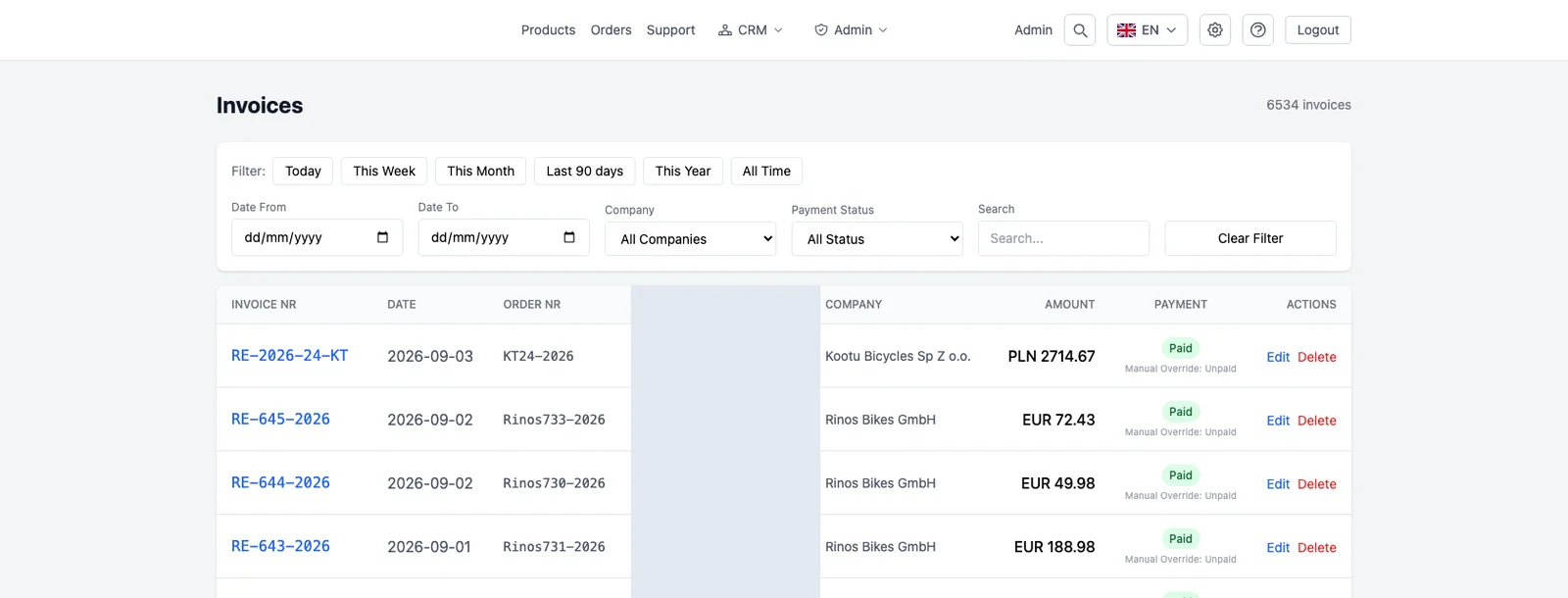
Vedron's e-invoicing pipeline generates the structured XML directly from the order data already in the system (no re-keying), submits it to KSeF, and writes the returned KSeF reference number back onto the invoice record automatically -- so the customer-facing document and the KSeF-submitted document are guaranteed to match, not maintained as two separate things that could drift apart. This is part of a broader e-invoicing architecture that also covers other countries' e-invoicing mandates (Peppol-based systems elsewhere in Europe use a similar structured-document model), so KSeF isn't a one-off bolt-on -- it's one implementation of a pattern the system already handles.

Frequently asked questions

Do I need KSeF if I'm not a Polish company?

If you're issuing invoices to customers in Poland, KSeF's requirements can apply regardless of where your business is registered, depending on the transaction type -- check the current phased rollout dates for your specific situation, since the mandatory timeline varies by business size and category.

What happens if a KSeF submission is rejected?

The invoice isn't considered validly issued until a submission is accepted and a KSeF number is returned -- a rejected submission needs to be corrected and resubmitted, which is exactly the step that's easy to miss without automated handling.

Does this work alongside marketplace sales (Allegro, Amazon, etc.), or only direct sales?

The same pipeline generates KSeF-compliant invoices regardless of which channel the order came from, since it works off the order record itself rather than being tied to one specific sales channel.

Have a question specific to your setup?

Every seller's marketplace mix and stock setup is a little different -- if you're weighing this against your own, book a short call and we'll walk through it with you directly rather than leaving you to figure it out from a blog post alone.

Beta offer: if you join as a beta client, custom integration setup -- configured for your actual marketplace and inventory mix -- is free for your first 2 months.

Still evaluating and need more time than the standard trial window? Just ask us for an extension -- we're happy to give you the room to actually test it properly before deciding.

Book a call or see plans and get started.

All posts

E-Invoicing for Polish Sellers: KSeF Compliance Without the Manual Work

10. Februar 20264 min read

KSeF (Krajowy System e-Faktur -- Poland's National e-Invoice System) is moving from optional to mandatory for businesses issuing invoices in Poland, on a phased timeline by business size. For online sellers, that means every invoice needs to be a structured XML document submitted to KSeF and carrying its own KSeF reference number -- not a PDF, and not something you can generate the same way you always have.

What actually changes under KSeF

Under the old model, an invoice is a document you create and send to the customer -- PDF, print, email, whatever works. Under KSeF, the invoice is only valid once it's been submitted to KSeF as structured XML and assigned a KSeF number by the system; what you hand the customer is essentially a reference to that submitted document, not the source of truth itself. Miss a required field in the XML schema and the submission gets rejected -- which, if nobody's watching for it, means you can end up believing an invoice was issued when it never actually was accepted by KSeF at all.

Where this typically breaks for sellers doing it manually

Three places, consistently: schema drift (KSeF's XML schema gets updated, and an invoice generator that isn't kept in sync starts failing submissions silently), volume (this is fine to handle by hand at ten invoices a month, not realistic at marketplace scale), and the reference-number round-trip (the KSeF number that comes back from a successful submission needs to make it back onto the customer-facing document, which is easy to skip if it's a manual step).

How Vedron handles this

Vedron's e-invoicing pipeline generates the structured XML directly from the order data already in the system (no re-keying), submits it to KSeF, and writes the returned KSeF reference number back onto the invoice record automatically -- so the customer-facing document and the KSeF-submitted document are guaranteed to match, not maintained as two separate things that could drift apart. This is part of a broader e-invoicing architecture that also covers other countries' e-invoicing mandates (Peppol-based systems elsewhere in Europe use a similar structured-document model), so KSeF isn't a one-off bolt-on -- it's one implementation of a pattern the system already handles.

Frequently asked questions

Do I need KSeF if I'm not a Polish company?

If you're issuing invoices to customers in Poland, KSeF's requirements can apply regardless of where your business is registered, depending on the transaction type -- check the current phased rollout dates for your specific situation, since the mandatory timeline varies by business size and category.

What happens if a KSeF submission is rejected?

The invoice isn't considered validly issued until a submission is accepted and a KSeF number is returned -- a rejected submission needs to be corrected and resubmitted, which is exactly the step that's easy to miss without automated handling.

Does this work alongside marketplace sales (Allegro, Amazon, etc.), or only direct sales?

The same pipeline generates KSeF-compliant invoices regardless of which channel the order came from, since it works off the order record itself rather than being tied to one specific sales channel.

Have a question specific to your setup?

Every seller's marketplace mix and stock setup is a little different -- if you're weighing this against your own, book a short call and we'll walk through it with you directly rather than leaving you to figure it out from a blog post alone.

Beta offer: if you join as a beta client, custom integration setup -- configured for your actual marketplace and inventory mix -- is free for your first 2 months.

Still evaluating and need more time than the standard trial window? Just ask us for an extension -- we're happy to give you the room to actually test it properly before deciding.

Book a call or see plans and get started.

Did you enjoy this article?