
Menu

Shop

Region & Language

BlogVedron

A warranty request that comes in as a plain email -- "my order arrived damaged, what do I do" -- has no ticket number, no visible status, and nothing stopping it from getting buried in a shared inbox next to marketing newsletters. For the customer, that's a genuinely bad experience regardless of how quickly you actually resolve it, because they have no way to check status without emailing again.

What a real warranty process needs

A structured way for the customer to actually submit the claim -- what happened, when they bought it, some way to identify the specific order and item -- rather than an unstructured email. A real ticket number they can reference. A visible status that changes as the claim moves through review, rather than silence until someone finally responds. And a lifecycle that reflects reality: open, in review, waiting on the customer for more information, and finally resolved, rejected, or closed.

How Vedron handles this

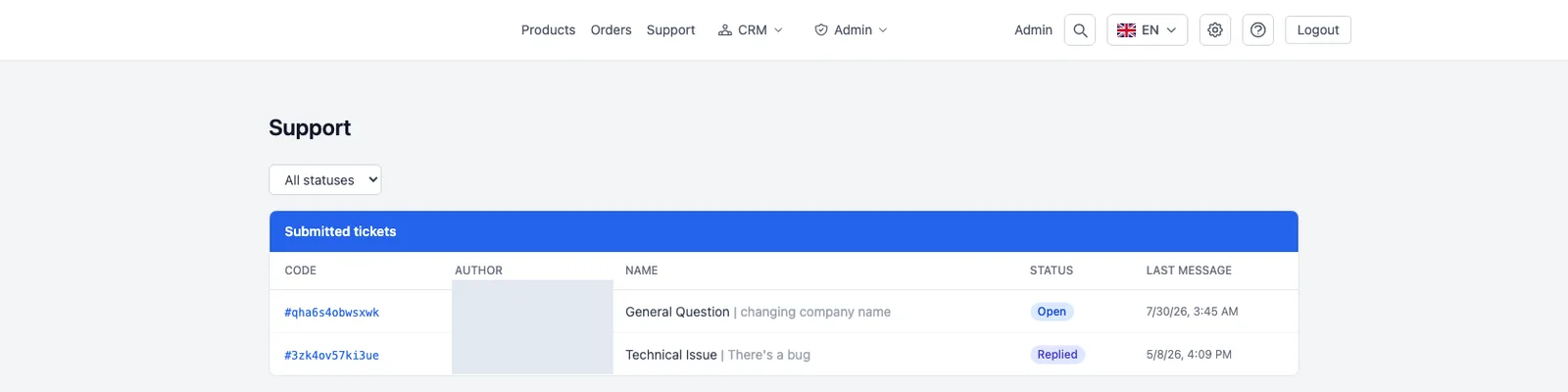
Vedron's warranty module gives customers a dedicated submission flow, capturing order number, serial number, purchase date, and a structured description of what happened rather than free-form email. Each ticket gets a real reference number scoped to your shop and country, and moves through a clear lifecycle -- open, in review, awaiting customer (triggered automatically when staff reply asking for more information), then resolved, rejected, or closed. That status is something the customer can actually check, not something they have to ask about.

Direct about current scope: order number and serial number are captured as provided rather than automatically validated against your order records today, so accuracy depends on the customer entering them correctly -- worth knowing if strict validation against existing orders is something your process specifically needs.

Frequently asked questions

Does this replace email entirely for warranty communication?

The ticket itself is the structured record and reference point; staff replies are what triggers status changes like moving to "awaiting customer," so the ticket stays the source of truth even if some back-and-forth happens over email.

Can ticket numbers be per-country if I sell into multiple markets?

Yes -- ticket numbering is scoped by shop and country, so a warranty ticket from an Austrian customer and one from a German customer get their own distinct, correctly-scoped reference numbers.

Is there a limit on how many warranty submissions can come in?

Submission is rate-limited to prevent abuse of the public submission form, while still allowing genuine customers to submit without friction.

Have a question specific to your setup?

Every seller's marketplace mix and stock setup is a little different -- if you're weighing this against your own, book a short call and we'll walk through it with you directly rather than leaving you to figure it out from a blog post alone.

Beta offer: if you join as a beta client, custom integration setup -- configured for your actual marketplace and inventory mix -- is free for your first 2 months.

Still evaluating and need more time than the standard trial window? Just ask us for an extension -- we're happy to give you the room to actually test it properly before deciding.

Book a call or see plans and get started.

All posts

Warranty Ticket Management: Giving Customers a Real Process, Not Just an Inbox

30. Juni 20263 min read

A warranty request that comes in as a plain email -- "my order arrived damaged, what do I do" -- has no ticket number, no visible status, and nothing stopping it from getting buried in a shared inbox next to marketing newsletters. For the customer, that's a genuinely bad experience regardless of how quickly you actually resolve it, because they have no way to check status without emailing again.

What a real warranty process needs

A structured way for the customer to actually submit the claim -- what happened, when they bought it, some way to identify the specific order and item -- rather than an unstructured email. A real ticket number they can reference. A visible status that changes as the claim moves through review, rather than silence until someone finally responds. And a lifecycle that reflects reality: open, in review, waiting on the customer for more information, and finally resolved, rejected, or closed.

How Vedron handles this

Vedron's warranty module gives customers a dedicated submission flow, capturing order number, serial number, purchase date, and a structured description of what happened rather than free-form email. Each ticket gets a real reference number scoped to your shop and country, and moves through a clear lifecycle -- open, in review, awaiting customer (triggered automatically when staff reply asking for more information), then resolved, rejected, or closed. That status is something the customer can actually check, not something they have to ask about.

Direct about current scope: order number and serial number are captured as provided rather than automatically validated against your order records today, so accuracy depends on the customer entering them correctly -- worth knowing if strict validation against existing orders is something your process specifically needs.

Frequently asked questions

Does this replace email entirely for warranty communication?

The ticket itself is the structured record and reference point; staff replies are what triggers status changes like moving to "awaiting customer," so the ticket stays the source of truth even if some back-and-forth happens over email.

Can ticket numbers be per-country if I sell into multiple markets?

Yes -- ticket numbering is scoped by shop and country, so a warranty ticket from an Austrian customer and one from a German customer get their own distinct, correctly-scoped reference numbers.

Is there a limit on how many warranty submissions can come in?

Submission is rate-limited to prevent abuse of the public submission form, while still allowing genuine customers to submit without friction.

Have a question specific to your setup?

Every seller's marketplace mix and stock setup is a little different -- if you're weighing this against your own, book a short call and we'll walk through it with you directly rather than leaving you to figure it out from a blog post alone.

Beta offer: if you join as a beta client, custom integration setup -- configured for your actual marketplace and inventory mix -- is free for your first 2 months.

Still evaluating and need more time than the standard trial window? Just ask us for an extension -- we're happy to give you the room to actually test it properly before deciding.

Book a call or see plans and get started.

Did you enjoy this article?