Selling a finished bike assembled from a frame, wheels, groupset and a dozen other components is a different inventory problem than reselling something you receive. The components need to be allocated, the assembly needs tracking through its own stages, and the finished bike needs to become sellable stock only once it is physically built.
What production tracking needs
A clear stage. Planned, in production, completed, or stored as sellable stock, so you always know whether a “finished bike” on the books is actually ready to ship or still theoretical.
A bill of materials. Components allocated against the BOM so the parts consumed match what was specified for that product.
A release moment. Reserved components become consumed, and the finished product becomes available, only when the production order actually completes.
What runs today in Vedron
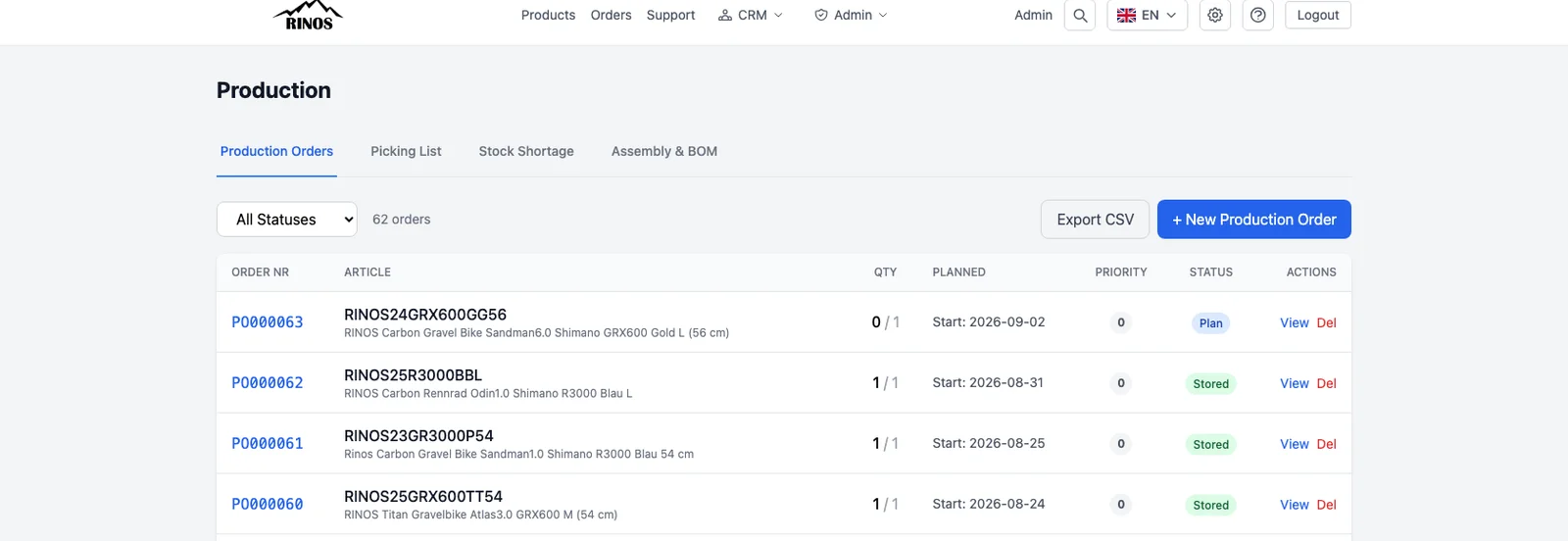
Production orders move through four stages: Plan, In Production, Produced, Stored. Component allocation is driven by the product’s BOM, matching bomlines against the production order to reserve the right parts in the right quantities. Only when a production order moves to Stored does the finished bike become sellable stock in the chosen location.
Common questions
Does this handle bundled accessories sold with a bike? Yes. Bill-of-materials covers component-to-product relationships, so a bundled build is modelled the same way as a single assembled product.
What happens to component stock while a production order is in progress? Components are reserved against the production order once it is created. They are shown as committed, not freely available.
Can a production order be tracked across multiple locations? Yes. The location where finished stock lands is chosen when the order moves to Stored, so assembly and storage do not need to be the same place.
Talk to us about your setup
Book a short call. Beta clients get two months of custom setup on us.