
Menu

Shop

Region & Language

BlogVedron

If you sell to a German public-sector buyer (a government agency, a public institution), a PDF invoice -- however professional -- generally isn't a valid invoice anymore. Germany's B2G e-invoicing requirement means the invoice has to be XRechnung, a specific structured XML format, or another format that meets the equivalent European e-invoicing standard (EN 16931).

What XRechnung actually is

XRechnung is a German-specific implementation of the EU's EN 16931 e-invoicing standard, defining exactly which fields a structured XML invoice must contain and how they must be formatted, so that public-sector accounting systems across Germany can process invoices automatically without a human re-keying the data. It's delivered either directly as XML or via Peppol, the pan-European e-invoicing delivery network -- either way, the receiving public body's system expects a machine-readable structured document, not a visual PDF layout.

Where this catches sellers off guard

A business that's never sold to the public sector before often doesn't realize B2G e-invoicing is a distinct, stricter requirement from ordinary B2B invoicing -- until an invoice bounces back as non-compliant, which delays payment. And a business that generates XRechnung-format invoices for one type of transaction but not consistently across all qualifying public-sector sales ends up with a manual exception process that's easy to get wrong under time pressure.

How Vedron handles this

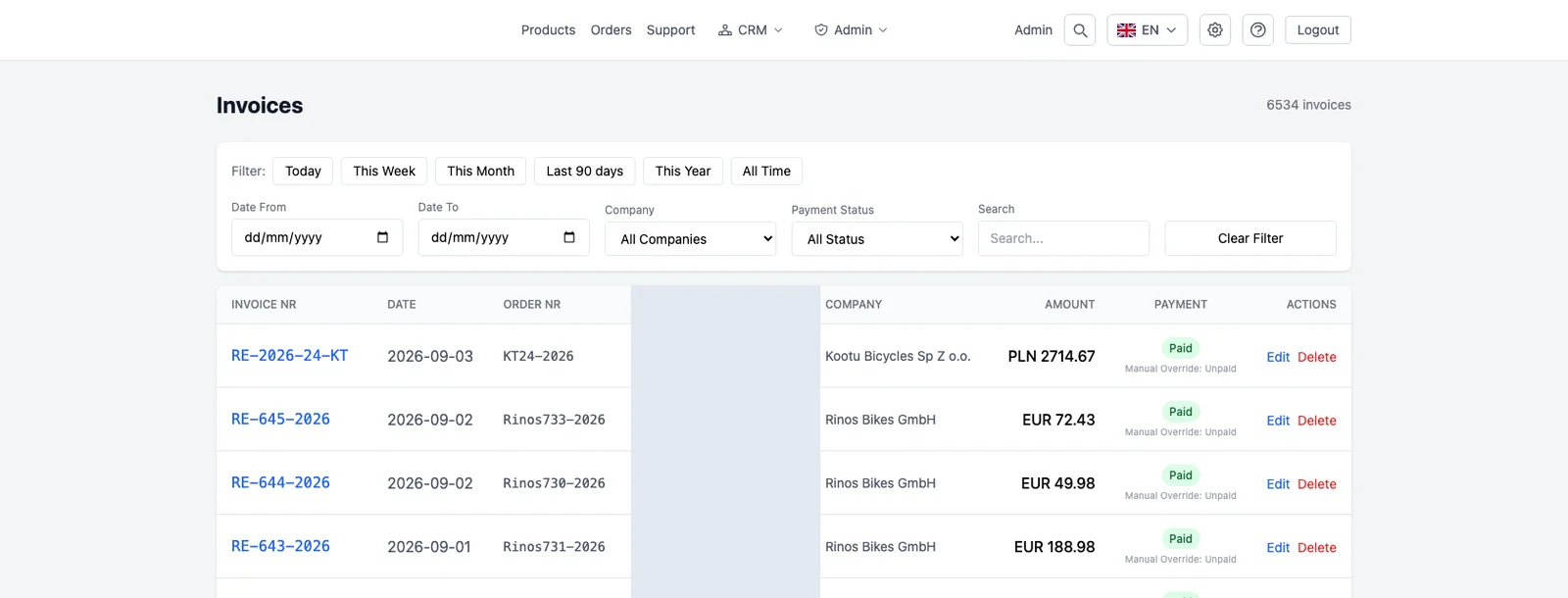
Vedron's e-invoicing pipeline generates EN 16931-compliant structured invoices -- including XRechnung's specific German requirements -- directly from order data already in the system, and can deliver via Peppol where that's the required channel. This is the same underlying e-invoicing architecture used for Poland's KSeF and other countries' structured e-invoicing mandates, so B2G compliance for German public-sector sales isn't a separate bolt-on process -- it's the same pipeline applied to a different document requirement.

Frequently asked questions

Does this apply to me if I only occasionally sell to a public-sector buyer?

If the buyer is a German public-sector entity, XRechnung (or an equivalent EN 16931-compliant format) generally applies regardless of how often you sell to that category of buyer -- check the specific requirement against your transaction, since exact scope can depend on contract value and buyer type.

Is XRechnung the same as KSeF or other countries' e-invoicing systems?

No -- each is its own national implementation, but several (including XRechnung) build on the same underlying EN 16931 European standard, which is why one well-built structured-invoicing pipeline can support multiple countries' specific requirements rather than needing a from-scratch build per country.

What happens if an XRechnung invoice is rejected as non-compliant?

It needs to be corrected and resubmitted before it's considered validly issued -- automated field validation against the XRechnung schema before submission is what prevents this from becoming a recurring manual fire-drill.

Have a question specific to your setup?

Every seller's marketplace mix and stock setup is a little different -- if you're weighing this against your own, book a short call and we'll walk through it with you directly rather than leaving you to figure it out from a blog post alone.

Beta offer: if you join as a beta client, custom integration setup -- configured for your actual marketplace and inventory mix -- is free for your first 2 months.

Still evaluating and need more time than the standard trial window? Just ask us for an extension -- we're happy to give you the room to actually test it properly before deciding.

Book a call or see plans and get started.

All posts

XRechnung: What Germany's B2G E-Invoicing Requirement Actually Means for Sellers

24. März 20263 min read

If you sell to a German public-sector buyer (a government agency, a public institution), a PDF invoice -- however professional -- generally isn't a valid invoice anymore. Germany's B2G e-invoicing requirement means the invoice has to be XRechnung, a specific structured XML format, or another format that meets the equivalent European e-invoicing standard (EN 16931).

What XRechnung actually is

XRechnung is a German-specific implementation of the EU's EN 16931 e-invoicing standard, defining exactly which fields a structured XML invoice must contain and how they must be formatted, so that public-sector accounting systems across Germany can process invoices automatically without a human re-keying the data. It's delivered either directly as XML or via Peppol, the pan-European e-invoicing delivery network -- either way, the receiving public body's system expects a machine-readable structured document, not a visual PDF layout.

Where this catches sellers off guard

A business that's never sold to the public sector before often doesn't realize B2G e-invoicing is a distinct, stricter requirement from ordinary B2B invoicing -- until an invoice bounces back as non-compliant, which delays payment. And a business that generates XRechnung-format invoices for one type of transaction but not consistently across all qualifying public-sector sales ends up with a manual exception process that's easy to get wrong under time pressure.

How Vedron handles this

Vedron's e-invoicing pipeline generates EN 16931-compliant structured invoices -- including XRechnung's specific German requirements -- directly from order data already in the system, and can deliver via Peppol where that's the required channel. This is the same underlying e-invoicing architecture used for Poland's KSeF and other countries' structured e-invoicing mandates, so B2G compliance for German public-sector sales isn't a separate bolt-on process -- it's the same pipeline applied to a different document requirement.

Frequently asked questions

Does this apply to me if I only occasionally sell to a public-sector buyer?

If the buyer is a German public-sector entity, XRechnung (or an equivalent EN 16931-compliant format) generally applies regardless of how often you sell to that category of buyer -- check the specific requirement against your transaction, since exact scope can depend on contract value and buyer type.

Is XRechnung the same as KSeF or other countries' e-invoicing systems?

No -- each is its own national implementation, but several (including XRechnung) build on the same underlying EN 16931 European standard, which is why one well-built structured-invoicing pipeline can support multiple countries' specific requirements rather than needing a from-scratch build per country.

What happens if an XRechnung invoice is rejected as non-compliant?

It needs to be corrected and resubmitted before it's considered validly issued -- automated field validation against the XRechnung schema before submission is what prevents this from becoming a recurring manual fire-drill.

Have a question specific to your setup?

Every seller's marketplace mix and stock setup is a little different -- if you're weighing this against your own, book a short call and we'll walk through it with you directly rather than leaving you to figure it out from a blog post alone.

Beta offer: if you join as a beta client, custom integration setup -- configured for your actual marketplace and inventory mix -- is free for your first 2 months.

Still evaluating and need more time than the standard trial window? Just ask us for an extension -- we're happy to give you the room to actually test it properly before deciding.

Book a call or see plans and get started.

Did you enjoy this article?